A driveway in South Wales has to stand up to a lot: heavy rain, frost, coastal weather, and daily wear and tear. Whether your driveway is tarmac, resin, gravel, or block paving, certain issues tend to appear more often in our region than anywhere else in the UK.
Here are the most common driveway problems South Wales homeowners face—and more importantly, how to prevent them before they become costly repairs.
1. Flooding & Poor Drainage
Why it happens:
South Wales is no stranger to intense rainfall and sudden downpours. If a driveway has poor drainage—no soakaways, blocked channels, or incorrect gradients—water quickly pools on the surface.
Signs to watch for:
- Standing water after rain
- Water running toward your home instead of away
- Damp patches that never dry
How to prevent it:
- Install proper drainage channels or a French drain
- Choose permeable surfaces like permeable block paving or resin-bound
- Ensure driveways are laid with an adequate fall (slope)
- Keep drainage channels clear of leaves and debris
2. Cracking in Tarmac and Concrete Driveways
Why it happens:
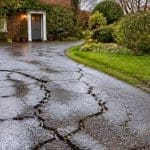
Frequent freeze-thaw cycles cause tarmac and concrete to expand and contract. Over time, this creates cracks, especially if the base wasn’t prepared properly.
Signs to watch for:
- Hairline cracks
- Loose surface material
- Crumbling edges
How to prevent it:
- Seal the driveway every 2–3 years
- Repair small cracks early before water gets in
- Invest in a strong, well-compacted sub-base
- Consider switching to resin-bound or block paving for more flexibility
3. Moss, Algae & Lichen Growth
Why it happens:
Wales’ damp climate provides the perfect environment for moss and algae—especially on shaded driveways facing north or covered by trees.
Signs to watch for:
- Slippery green patches
- Discolouration
- Weeds growing between pavers
How to prevent it:
- Pressure wash once or twice a year
- Apply a professional-grade moss and algae inhibitor
- Improve sunlight exposure by trimming overhanging branches
- Seal block paving to reduce moisture absorption
4. Loose or Sinking Block Paving
Why it happens:
Areas like Cardiff, Swansea, and the Valleys often have softer ground. If the sub-base isn’t installed deep enough, blocks can shift over time—especially with heavy vehicles or constant rain.
Signs to watch for:
- Dips or uneven surfaces
- Blocks rocking when stepped on
- Gaps forming between blocks
How to prevent it:
- Ensure the installer uses at least 150–200mm of compacted sub-base
- Re-sand and re-seal every few years
- Avoid driving heavy vans or caravans onto older block paving
5. Loose Gravel & Bald Patches
Why it happens:
High winds and slope driveways can gradually wash gravel away, creating bald spots and uneven areas.
Signs to watch for:
- Bare patches
- Gravel drifting onto pavements or roads
- Tyre ruts
How to prevent it:
- Use a gravel stabilisation grid
- Choose 14–20mm stones to avoid scattering
- Install edging to keep gravel contained
- Top-up the surface every 1–2 years
6. Resin Driveway Discolouration or Loose Stones
Why it happens:
Low-quality resin or UV-unstable materials can fade in sunlight. Poor installation can also leave loose aggregates on the surface.
Signs to watch for:
- Yellowing patches
- Loose stones
- Uneven texture
How to prevent it:
- Choose UV-stable resin only
- Use a trusted professional installer
- Sweep loose stones early to prevent further shedding
- Rinse the driveway regularly to prevent dirt buildup
How South Wales Driveways Can Help
At South Wales Driveways, we’ve installed and repaired driveways across Cardiff, Swansea, Newport, Bridgend, Barry, and the Valleys for over 20 years. We understand the challenges that Welsh weather creates, and we use the right materials and techniques to ensure your driveway lasts.
Whether you need:
- A brand-new driveway
- Repairs to flooding or sinking areas
- A full driveway renovation
- A maintenance plan
—we can help.
Book a Free Driveway Assessment
If you’re experiencing any of the issues listed above, early intervention will save you money in the long run.
Get a free quote and site assessment today at SouthWalesDriveways.co.uk.